Every Frontier Model Can Outline a Picture. Only One Wins Quality, Speed and Price.
AI models have been describing images pretty well for a while now. Hand one a photo and it'll tell you what's in the frame.
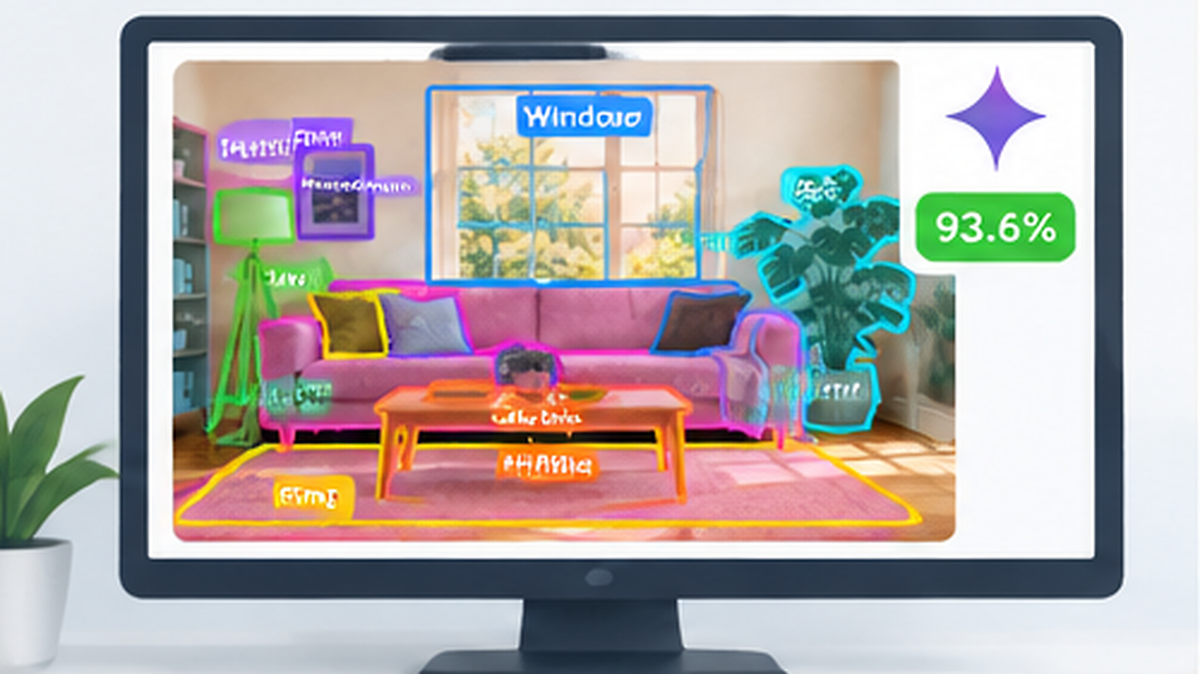
But describing a picture isn't the same as tracing the exact edges of every object inside it. That's what image outlining (also called segmentation) actually does: instead of drawing a rough box around an item, the model follows its real contour and labels each piece.
And it's useful across a lot of real workflows. Designers can direct software with words instead of using complex selection tools (developers.googleblog.com). Online stores rely on it to create clean product photos (remove.bg). Insurance adjusters can prompt a model to segment homes with weather damage, and workplace safety tools can identify whole situations rather than isolated objects (developers.googleblog.com). Beyond that, segmentation is used across natural images, agriculture, manufacturing, remote sensing, and healthcare (arxiv.org).
Here is what outlining actually looks like.
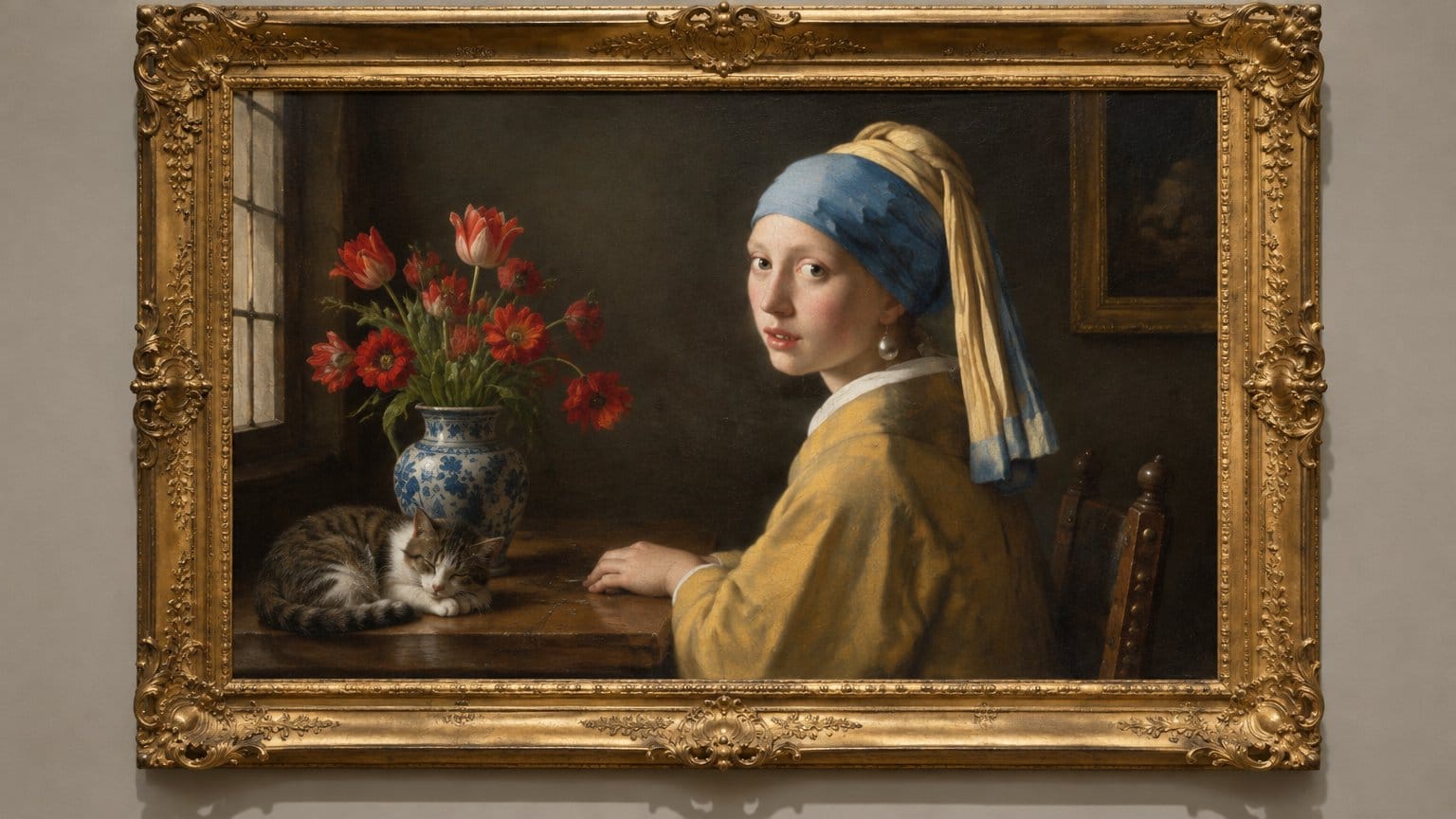
This is the raw test image we hand the model: a classical oil painting in a heavy gilded frame on a museum wall.
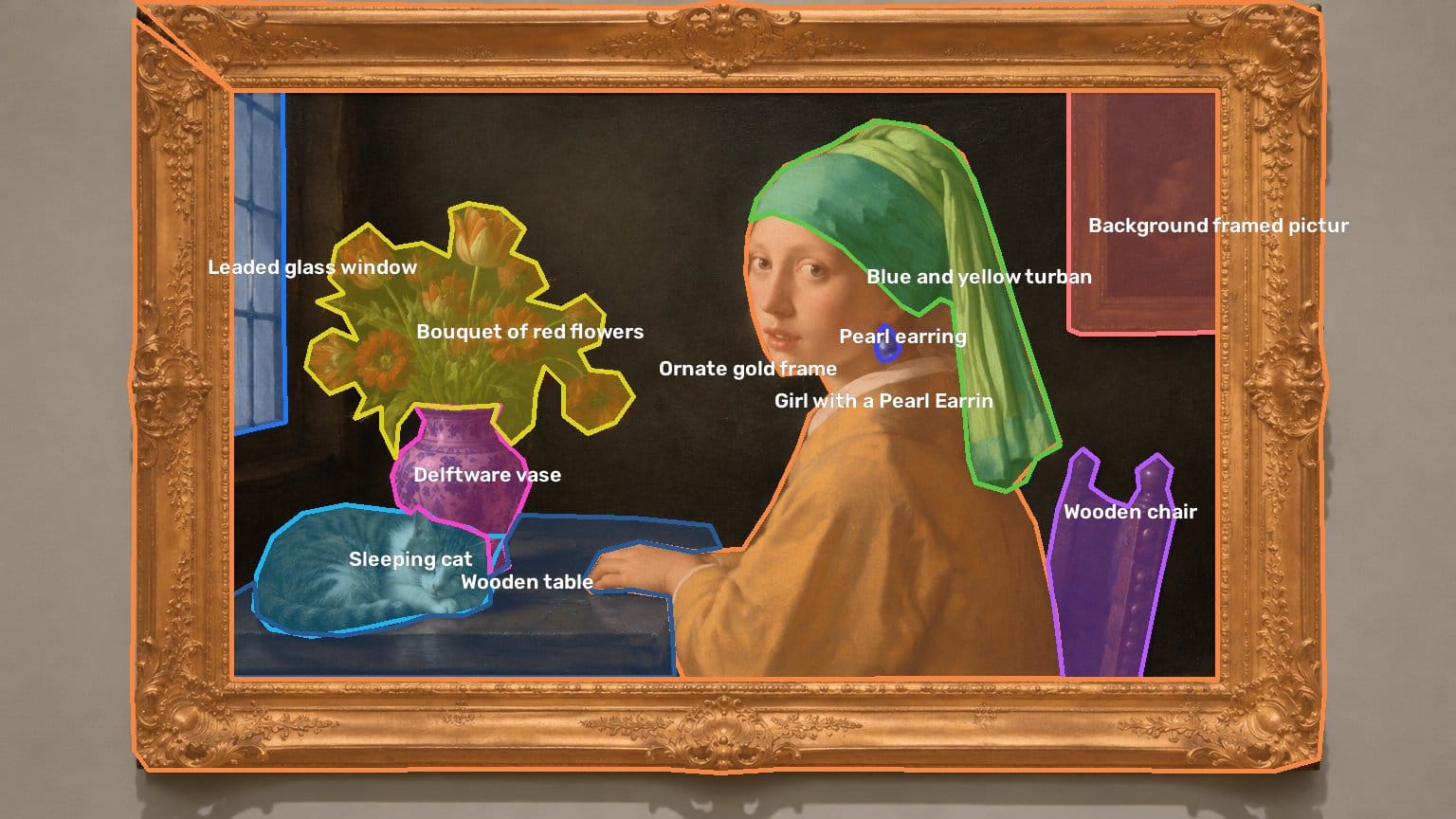
Notice how the whole picture gets broken into separate colored shapes, each hugging the real edges of the frame, the woman, the flowers, and the sleeping cat.
Older vision setups mostly stopped at bounding boxes, returning four coordinates scaled to 0–1000 to draw a plain rectangle (aistudio.google.com). Google pushed that further in Gemini by letting models identify objects based on their relationships to what's around them (developers.googleblog.com) and return segmentation masks as base64-encoded PNG probability maps with values between 0 and 255 (aistudio.google.com, simonwillison.net).
Once I saw how well Gemini handled outlining, one question wouldn't leave my head. How do the other models perform on the exact same task?
That question kicks off a new section on airabbit.blog called Experiments, and this is the first post in it. I put five models head-to-head on the same outlining job: Gemini 4 Argon, Gemini 4 Hydrogen, Kimi K3.1 Pro on OpenRouter, plus Claude Fable 5.2 and Claude Opus 5.5 running as Claude Code subagents.
The Results
Gemini 4 Argon won, and it wasn't even close on the full scorecard.
It averaged 93.61% overlap with the true shapes across all 14 scored objects, cleared the 85% mark on all 14 of them, ran at a median of 55.7 seconds per picture, and cost $0.1938 total for all five pictures.
Highest accuracy. Fastest run. Lowest API bill.
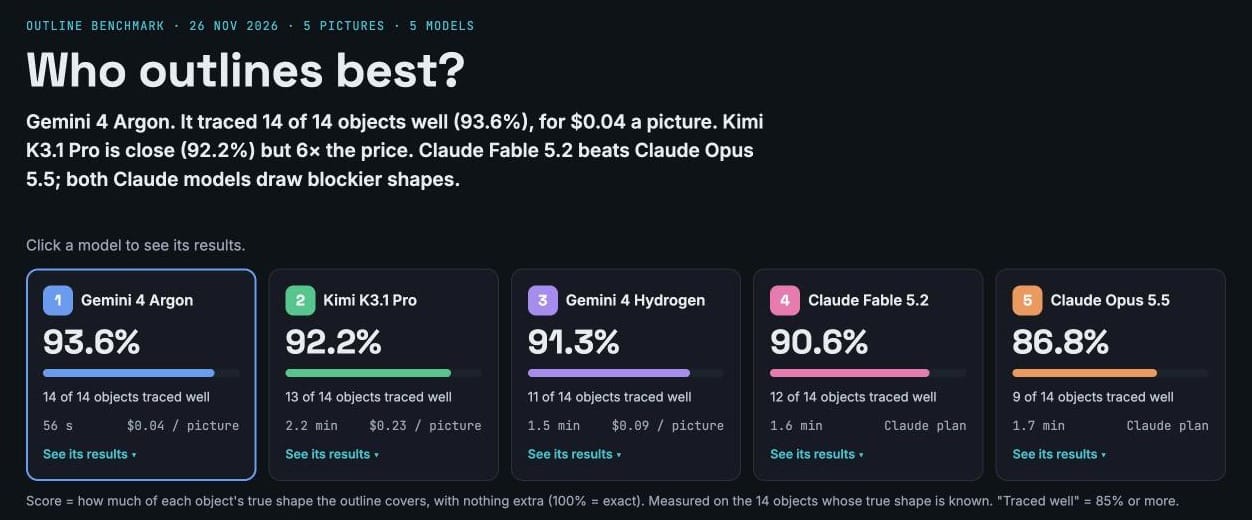
Notice how Gemini 4 Argon leads average overlap, objects over 85%, and median speed all at once, while Claude Fable 5.2 beats Claude Opus 5.5 across the board.
Here is how the rest of the field stacked up:
- Kimi K3.1 Pro finished second at 92.21% average overlap. It cleared 85% on 13 of 14 objects and labeled the most individual parts across the five scenes (88 total), though it took a median of 133.8 seconds per picture and cost $1.1575 for the run.
- Gemini 4 Hydrogen took third at 91.28%. It cleared 85% on 11 of 14 objects in a 90.0-second median and cost $0.47 for the five pictures, which is more than twice Argon's bill for a lower score.
- Claude Fable 5.2 came in fourth at 90.59%, ahead of Opus. Running as a Claude Code subagent, Fable hit 85% or higher on 12 of 14 objects at a 95.0-second median and labeled 83 parts total.
- Claude Opus 5.5 landed fifth at 86.77%. It cleared 85% on only 9 of 14 objects, ran at a 100.7-second median, and labeled 87 parts total. Both Claude models ran on the Claude plan, using about 80,000 tokens per picture.
How the Benchmark Works
So how do you measure outline quality without guessing by eye?
We generated five 1536 x 864 test pictures using an AI image model (Flare low):
1-art-heist: a classical oil painting in a gilded frame on a museum wall3-rewild-room: a bright modern living room seen from the front5-ransom-note: a plain sheet of white paper on a dark wooden desk8-orbit-chart: a circular astrology birth chart on dark blue paper10-wheres-your-kid: a crowded busy fairground seen from a high angle
Four of those five pictures include loose elements placed on a plain side-panel background: four animals in 3-rewild-room (fawn, fox, rabbit, hedgehog), four celestial bodies in 8-orbit-chart (sun, moon, mars, venus), a girl in a raincoat in 10-wheres-your-kid, and five letters in 5-ransom-note (H, E, yellow L, green L, O). That gives us 14 scored objects.
Because each of those 14 objects sits on a plain panel background, the exact true shape is simply every pixel that differs from the background color. For every model, our scoring script (truth.py) gathers every polygon piece that lies at least halfway inside that object's box and merges them into one outline (so if a model splits the girl in a raincoat into hood, coat, jeans, and boots, it still counts as one object). Then it measures intersection over union against the true shape, where 100% is a perfect match.
Every model received the exact same prompt asking for JSON only: a list of parts with name, info, box_2d, and polygons (12 to 80 [y, x] points per piece, coordinates normalized to 0–1000).
- Gemini 4 Argon (
google/gemini-4-argon) and Gemini 4 Hydrogen (google/gemini-4-hydrogen): one OpenRouter call per picture, run on 14 Nov 2026. - Kimi K3.1 Pro (
moonshotai/kimi-k3.1-pro): one OpenRouter call per picture (temperature0.5,max_tokens40000), run on 26 Nov 2026. - Claude Fable 5.2 (
claude-fable-5-2) and Claude Opus 5.5 (claude-opus-5-5): one Claude Code subagent per picture, run on 26 Nov 2026. Each subagent could inspect the picture using only theReadtool and save the JSON withWrite. No scripts, no Bash, no cropping, zooming, or measuring.
Where the Gap Shows Up
If you only look at simple shapes, every model in this test looks great.
On the five cutout letters in 5-ransom-note, even fifth-place Opus stayed between 89.6% (letter O) and 97.6% (yellow L), while Argon sat between 95.7% and 98.2%. On the circular planets in 8-orbit-chart, several models actually beat Argon: Hydrogen hit 98.9% on Mars, Fable hit 98.6% on Mars and 97.7% on Venus, and Opus hit 98.1% on Venus (compared to Argon's 92.7% on Mars and 92.2% on Venus).
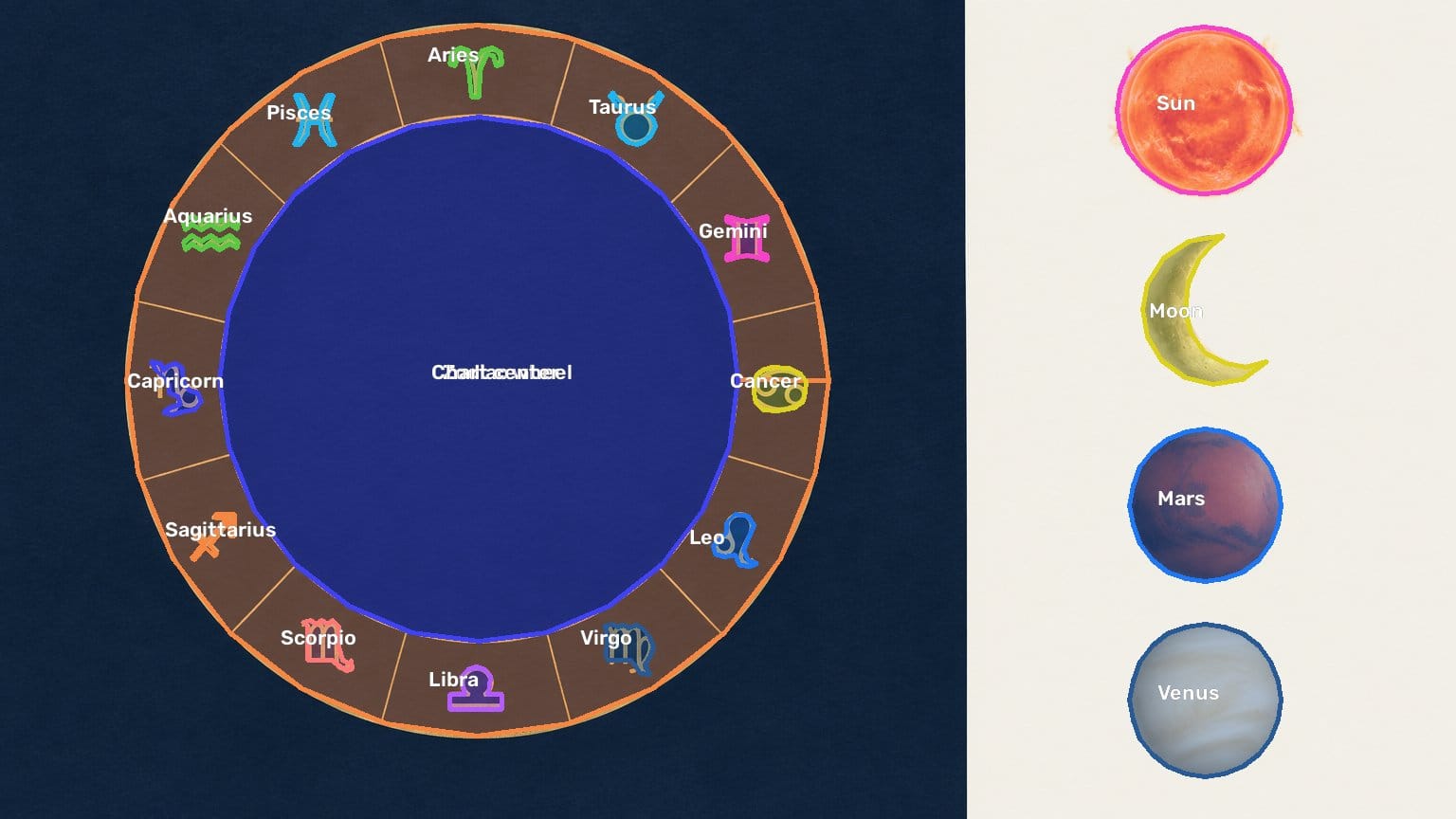
Notice how tightly Claude Fable 5.2 hugs the round shapes on the birth chart, scoring 98.6% on Mars, 97.7% on Venus, 93.7% on the Sun, and 89.6% on the Moon.
Irregular silhouettes are where the models separate.
The four animals in 3-rewild-room were the toughest objects in the benchmark, especially the fawn and the fox. That single scene explains most of the gap on the leaderboard.
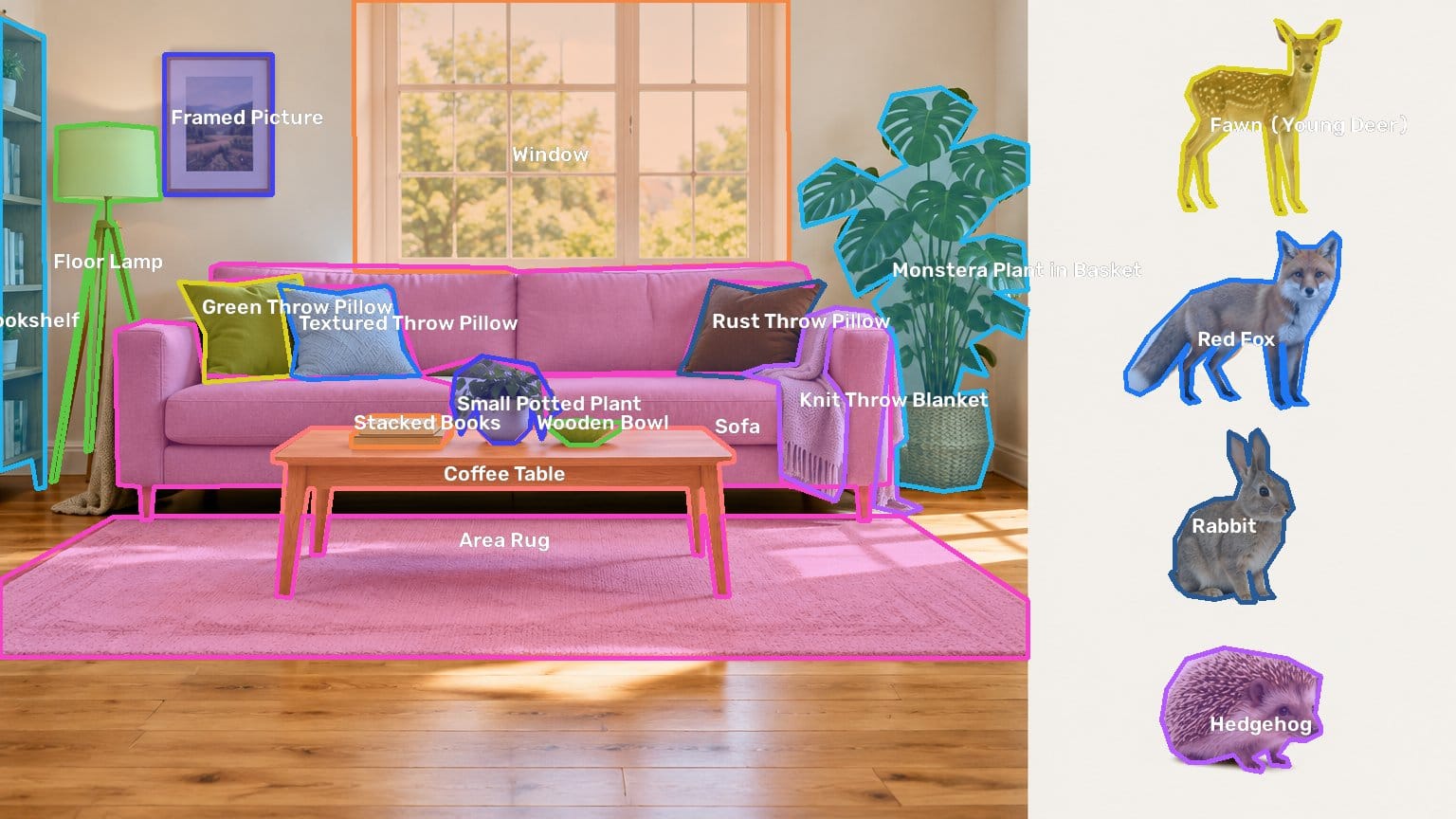
In the full living room scene, Gemini 4 Argon is the only model that cleared 85% on all four animals: 87.5% on the fawn, 89.2% on the fox, 91.2% on the hedgehog, and 94.4% on the rabbit.
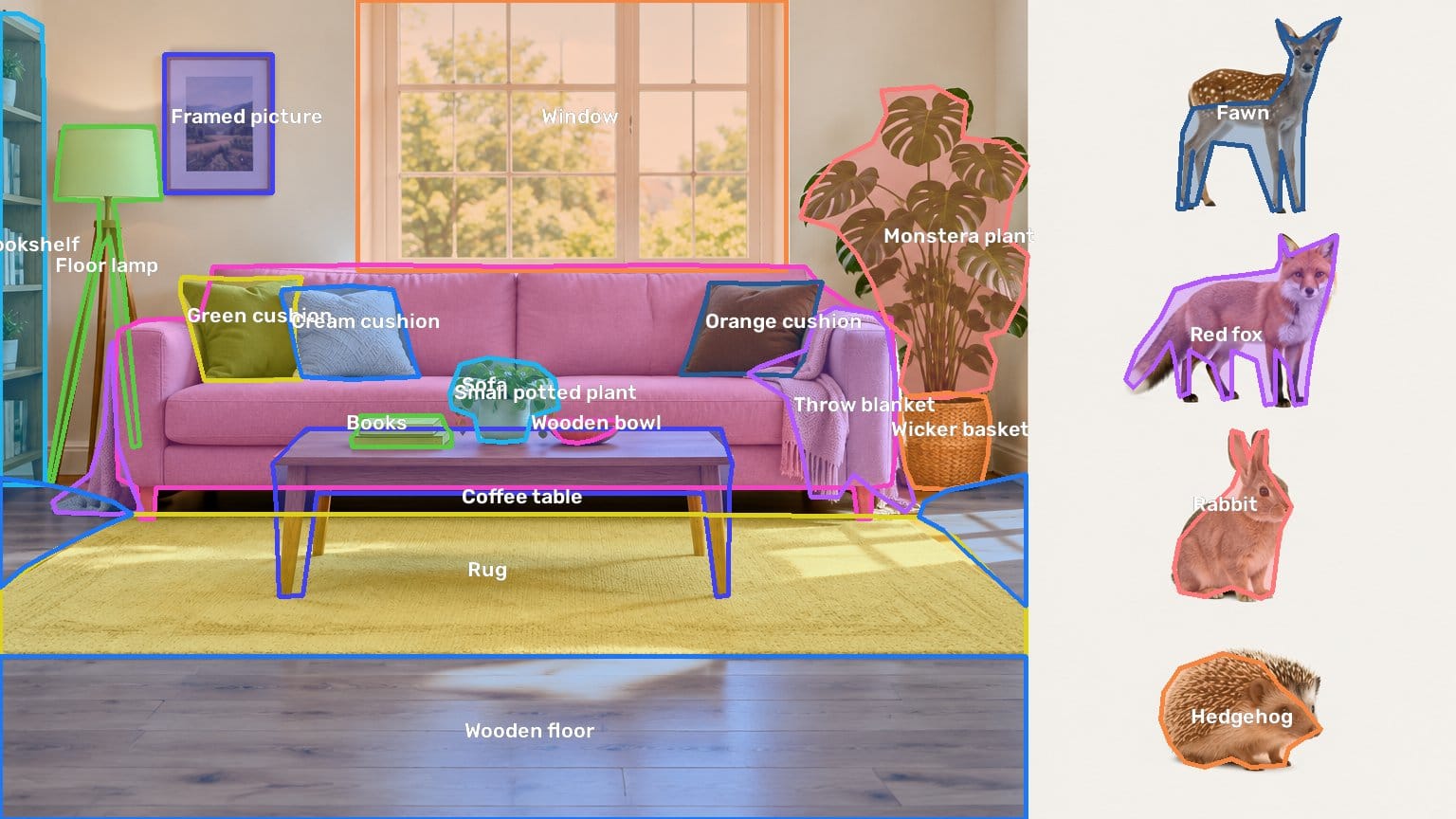
Compare that with Claude Opus 5.5 on the exact same picture, where overlap dropped to 54.3% on the fawn, 70.3% on the fox, 79.2% on the hedgehog, and 83.2% on the rabbit.
Even the stronger runners-up struggled with the fawn in that scene. Hydrogen scored 76.7%, Kimi scored 70.6%, and Fable scored 67.5%.
Where Kimi K3.1 Pro did stand out was granularity. Across all five pictures, Kimi labeled 88 separate parts compared to Argon's 64, while still holding a strong 95.1% overlap on the girl in the raincoat in the crowded fairground (right behind Argon's 95.8%).
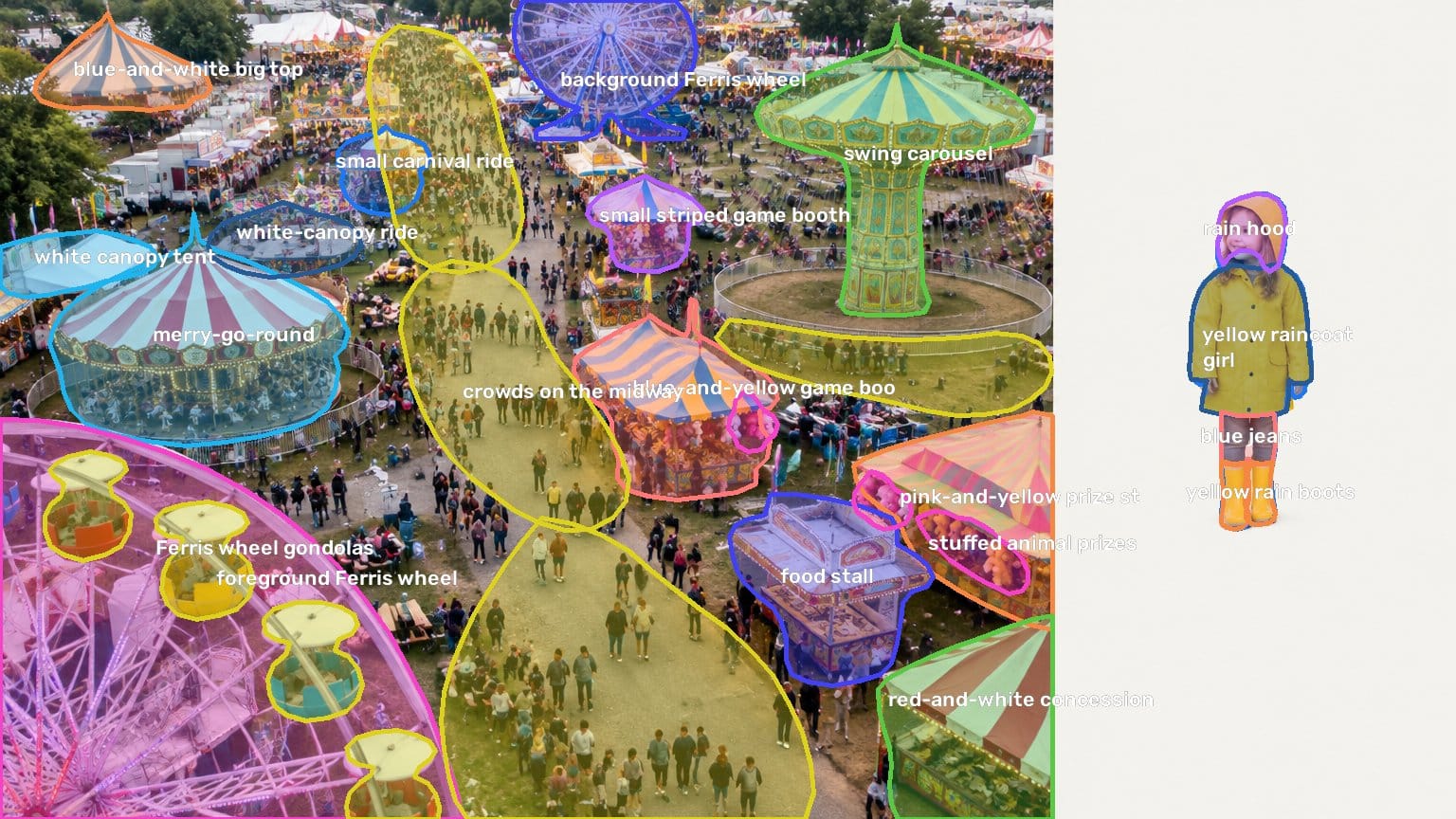
Notice how Kimi K3.1 Pro splits the busy fairground into dozens of labeled pieces while keeping a 95.1% overlap on the girl in the raincoat.
A Few Caveats
Of course, there are limits to keep in mind:
- Small test set. The accuracy numbers cover 14 scored objects across four of the five generated 1536 x 864 scenes. It's plenty to expose how models handle simple vs. irregular edges, not a giant academic dataset.
- Different dates and billing setups. Both Gemini runs happened on 14 Nov 2026 via OpenRouter, while Kimi, Fable, and Opus ran on 26 Nov 2026, with the Claude models running as Claude Code subagents on the Claude plan (about 80,000 tokens per picture) instead of metered OpenRouter calls.
- Raw polygon JSON for everyone. Every model had to output 12-to-80-point polygons in JSON, rather than using a provider-specific mask feature like Gemini's base64 PNG masks (aistudio.google.com).
The Bottom Line
If you want an AI model to outline parts of an image today, Gemini 4 Argon is a no-brainer. It beat every other model on average overlap (93.61%), didn't drop below 85% on a single object, finished fastest (55.7 seconds median), and cost $0.1938 for all five pictures.
Kimi K3.1 Pro is a solid second choice if you want finer part breakdowns (88 labeled parts vs. Argon's 64), as long as you're fine waiting 133.8 seconds per image and paying $1.1575. And if you're already running inside Claude Code, pick Fable 5.2 over Opus 5.5 for outlining. It was both more accurate and slightly faster.
Reference — Everything to Copy
Hand these straight to your API script or subagent if you want to test outlining on your own images.
The outlining prompt (exact request sent to every model)
Find every distinct part or object a learner would ask about in the image. Output only JSON, no other text: a list with one entry per part found. Each entry has "name" (a short label a learner would use), "info" (one short plain sentence that explains what this is or does, for a curious non-expert), "box_2d" as [ymin, xmin, ymax, xmax], and "polygons": a list of polygons, one per separate piece of that part (for example several chloroplasts), each polygon a list of [y, x] points that follow the real outline, 12 to 80 points. All coordinates normalized to 0-1000.
The Claude Code subagent wrapper
1. Look at this picture with the Read tool: <picture>.png (1536 x 864 pixels).
2. Answer this request exactly, as written: <the request>
3. Write ONLY that JSON (nothing else) with the Write tool to: <file>
Rules: do not run any code, script or Bash; do not crop, zoom, measure or process the image with any tool; read the picture once or more with Read only.
Measure it, don't eyeball it.