
Is Microsoft Winning the AI Race While Losing Its Users?

In the tech world right now, the loudest narrative is that Apple is losing. While competitors sprint ahead with Generative AI, chatbots, and "agentic" operating systems, Apple seems to be taking its sweet time. Investors are nervous. Tech pundits are impatient.
As a long-time Mac user, I am sometimes frustrated by how primitive Mac is compared to some other operating systems (see the terrible Siri 'AI'.).
But honestly, looking at the bigger picture, I am kind of relieved.
To understand why, you have to look at the user-hostile approach Microsoft has taken with Windows 11.
It is a lesson on how to Move Fast and Break Trust.
A recent report on the state of Windows 11 highlights exactly why rushing AI integration is a disaster. Microsoft has pivoted to what they call an “Agentic OS”—an operating system infused with autonomous AI agents. On paper, it sounds futuristic. In reality, it has resulted in what critics are calling the "enshittification" of the PC.
Here is just a glimpse of the execution of this Microsoft strategy on a company wide Cloud and AI.
- Forced Integration: You can’t escape it. Copilot is being shoved into the taskbar, and new keyboards even have a dedicated hardware button for it.
 Olivia Johnson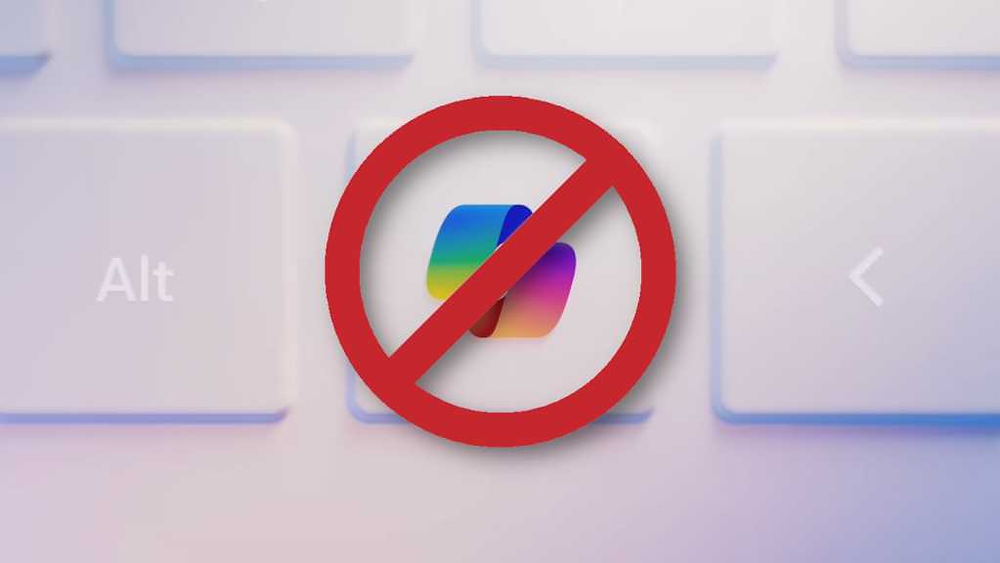
- Privacy Nightmares: The most egregious example was Windows Recall. Microsoft thought it was a good idea to have an AI constantly take screenshots of your desktop to create a "searchable memory." It was an immediate privacy disaster. Security researchers found the data was stored plainly, and the backlash was so fierce Microsoft had to retreat and make it opt-in.
 Andy Greenberg
- Loss of Control: Windows 11 is increasingly treating the user as a product. From forced Microsoft Account logins to ads in the Start menu, the OS feels like a tool to extract value from the user rather than a tool for the user.
And dozens of more “great features”.
But one thing that makes me speechless is this:
Windows Users can’t even create local users anymore.
Seriously? (though some users have reported some terrible workarounds, I don’t expect a typical user to have to go through this pain to use a local account!)
There are hundreds of videos talking about this frustration. Here is a recent one that I found quite comprehensive:
The middle ground
So, is 'no AI' the way to go? Well, as you might have guessed, certainly not. I'd rather opt for Apple's approach of introducing new technology slowly but surely.
Here are some ideas.
1. 100% Transparency on Data Usage
It is not enough to say "your data is safe." We need technical transparency.
- Training vs. Inference: I need to know specifically: Is my data being used to train your model for everyone else, or is it strictly used for inference (processing my request) and then discarded?
- Regional Sovereignty: Where is the processing happening? On-device? In a cloud server? If it's the cloud, in which region? I need to know my data isn't crossing borders into jurisdictions with weaker privacy laws.
2. A Nuanced, Sensitive Introduction
Technology should serve us, not nag us. Microsoft’s approach has been to clutter the interface with pop-ups and "recommendations." I want an AI that is invisible until I summon it. It should be a quiet utility, not a noisy salesperson.
3. The Power of "No" (True Opt-In)
One size does not fit all.
- Choice: The most important feature of any AI tool is the "Off" switch. Actually, it shouldn't even be an "Off" switch. It should be an "On" switch. AI should be strictly opt-in.
- Granularity: I might want AI to help me summarize emails, but I absolutely do not want it analyzing my photos or reading my code. I need granular controls to choose exactly which parts of my digital life the AI can touch.
Conclusion
Microsoft is currently proving that you can ruin a dominant operating system by ignoring user consent and privacy in a desperate bid to win the "AI War."
Just to be clear, I am not super happy with the pace Apple is taking, but at least we users still have the choice to integrate third-party tools (including open-source tools, which I use extensively and write about on my blog).
Of course, it would be better if AI were integrated, but I believe this is only a matter of time, and I hope will, as it often did in the past, do it the right way.
I’d rather have a late AI that works for me, than an early AI that spies on me.